
Lactic Acid Face Wash & Skincare Benefits: Why It Belongs in Your Daily Routine

Introduction
Are you troubled by a lifeless appearance, rough texture, and recurrent breakouts? If you are, you're not alone. A good skin care regimen often misses this most potent skin-friendly component, lactic acid.
Once famous for its gentle exfoliation and moisture retention, lactic acid is now being increasingly favored by those who seek clearer, smoother, and healthier skin.
The largest AHA skincare market, which includes lactic acid, is growing at a rate of more than 7% annually (Grand View Research). In two weeks, a 48% improvement in skin texture and tone was observed in participants in a clinical study who used products containing lactic acid.
A benefit of lactic acid is that it can be gentle enough for sensitive skin yet powerful enough to yield visible results, making it suitable for everyday skin care.
We will discuss how face washes with lactic acid work, their benefits, and why products like Rose and Rabbit Creamy Facial Wash are ideal for everyday use. So, you can return to the ancient regimen and get that shine going. Keep reading.
What Is Lactic Acid?
An alpha-hydroxy acid, lactic acid, is derived chiefly from milk or fermented vegetables. It exfoliates on a chemical basis by dissolving the bonds between dead skin cells on the uppermost layer of the skin, facilitating a gentle shedding process, unlike rough scrubbing with a physical exfoliant.
Its uniqueness is in twin functions: moisturizing and exfoliating. Lactic acid draws and holds water in the skin, acting as a natural humectant that makes your skin soft and supple. Hence, for individuals seeking the texture without drying out their face, lactic acid is the ideal choice.
This product is highly regarded in the beauty market because it suits all skin types, particularly those with dry and dull complexions that require comfort. Your new best friend is lactic acid if you have been searching for a gentle exfoliating facial cleanser that will not cause redness or flaking.
How Lactic Acid Works on Your Skin
Lactic acid gently removes dead skin cells while also keeping your skin hydrated, making it both an effective exfoliator and a moisture booster. The works in the following manner:
- Exfoliates Dead Skin Cells: The acid breaks down the bonds between the dead skin cells, clearing clogged pores and facilitating exfoliation.
- Enhances Hydration: Lactic acid, unlike other AHAs, draws moisture to the skin, ensuring no dryness occurs after application.
- Lightens Pigmentation: Regular usage lightens pigmentation, acne marks, and irregular texture, giving a glowing skin complexion.
- Strengthening of the Skin Barrier: Repeated use diminishes the sensitivity of the skin to external and internal environmental stressors and calms down the skin.
As such, lactic acid is the perfect choice for a daily lactic acid cream, particularly when it is beautifully balanced in a formula, such as the Rose and Rabbit Face Wash—a gentle exfoliating moisturizer that can be used daily when washing the face.
ALSO READ: Hyperpigmentation After Acne? The Ingredients That, Without Irritating, Gently Fade the Marks
Benefits of Using a Lactic Acid Face Wash Daily
The widespread use of a lactic acid face wash has several benefits, which is why it is used on all skin types, particularly acne, sensitive, or dry skin. As it does mild exfoliation that is safe for daily use, it avoids irritation brought about by physical scrubs or more aggressive acids.
- Healthy Glow: Exfoliation removes dead skin and grants skin that luminous glow, hence why it is often said to be the best lactic acid face wash for glowing skin.
- Hydration: Hydrate your skin with lactic acid and pair it with oil-fighting moisturizers that won't clog pores.
- Breakouts and Acne: It has been capable of maintaining pores clean, thereby lessening the potential of whiteheads, blackheads, and other forms of acne to develop.
- Pigmentation: It can help fade dark spots or discoloration, making lactic acid an effective cleanser for addressing pigmentation.
Lactic acid is all about promoting good skin health with time, beyond just cleansing. Using some soothing product and Rabbit Creamy Facial Wash, which mixes these components with moisturizing substances, would certainly be beneficial for one's skin care routine, even when other needs are added.
Who Should Use Lactic Acid Face Wash?
You might wonder if a lactic acid face wash is suitable for sensitive skin. It is, but only when used correctly. This is the way different skin types can get the most out of lactic acid in their routine:
- Sensitive Skin Individuals: Because lactic acid is among the milder AHAs, it is possible to use it as a mild exfoliating cleanser in sensitive skin.
- Dry or Dehydrated Skin: Retain moisture, and it could be a good choice for addressing lactic acid.
- Oily and Acne-Prone Skin: It balances oil while clearing away dead skin, helping to heal acne problems to some degree.
- Dull and Uneven Skin: For a face wash that gives you glowing skin, lactic acid utilizes its exfoliating properties to bring back that brightness.
- Or Pigmented Skin: Individuals being treated for aging and dark spots may benefit from promoting cell turnover through this approach.
Also great for beginners using lactic acid skin care; start with those washes once daily, preferably in the evening, and always follow with sunscreen in the morning, as Aasay increases sun sensitivity.
How to Use Lactic Acid in Your Daily Skincare
While incorporating lactic acid into your skincare routine is very simple and helpful, it must be used correctly. Since it exfoliates gently, it can be used every day, depending on your skin's tolerance, and how you use it:
- Cleanse: Begin with a gentle, sulfate-free cleanser to gently wash away dirt and oil.
- Use a Lactic Acid Face Wash: Dispense a small amount of facial cleanser with lactic acid, such as Rose and Rabbit Creamy Facial Wash, onto damp skin. Gently massage and apply using fingertips in circular motions for 30 to 60 seconds.
- Rinse Well: Wash it off with lukewarm water and pat the skin dry with a towel.
- Moisturize: Apply a moisturizer that suits your skin type, whether it is oily or dry, to lock in hydration and keep your skin maintained in a balanced state.
- Sunscreen complexion (Daytime Only): Because lactic acid makes the skin more sensitive to sunlight, apply an SPF 30+ sunscreen during the day.
If you are new to using acids, or if your skin is very sensitive, it is safest to begin by washing your face with an acid cleanser three times a week or less. Then, if your skin can handle it, you can start to use it more often. Acne-prone and pigmented skin may also see dramatic improvements within 3–4 weeks when lactic acid is added to an ongoing daily care routine.
Common Misuses to Steer Clear of When Applying Lactic Acid
While lactic acid is thought to be mild, careless use can provoke the skin or at least render it less effective. These are a few common pitfalls individuals face with lactic acid and easy ways to steer clear of them for optimal benefits:
1. Skipping Sunscreen
Lactic acid renders the skin extra sensitive to sunlight. If you're using lactic acid in your daily skin routine and fail to use sunscreen, there is a risk of getting pigmentation or sunburn. Always finish your routine with a broad-spectrum sunscreen of at least SPF 30, especially when using lactic acid to wash your face in the morning.
2. Over-Exfoliating
Lactic acid is still a gentle exfoliant; however, its excessive use, especially in conjunction with other exfoliants like scrubs or retinoids, can lead to damage to the skin barrier. For beginners, they may wash with an herbal lactic acid cleanser two to three times a week, and then later will be able to use it every day.
3. Mixing With Incompatible Ingredients
Never combine lactic acid with other potent agents, such as vitamin C, benzoyl peroxide, or high concentrations of retinoids, unless instructed to do so by a dermatologist. Doing so can increase the risk of redness, dryness, or breakouts.
4. Not Moisturizing Afterwards
Please bear in mind that while lactic acid draws moisture into the skin, it is not intended to replace a good moisturizer. After exfoliating with lactic acid, follow up with a moisturizer suitable for your skin type, whether oily or dry, to further prevent water loss.
5. Using on Broken or Irritated Skin
Avoid applying lactic acid to freshly shaved, sunburned, or irritated skin, as it may cause stinging or discomfort. It’s essential to perform a patch test before applying any product to your face.
Choosing the Best Lactic Acid Face Wash
Exfoliating products abound on the market, but not all are created equal. Look for these key features in a lactic acid cleanser:
- Lactic acid concentration on the lower or moderate side (about 5% for daily use)
- Hydrating Ingredients, such as hyaluronic acid, aloe, or glycerin
- Harsh Sulfates or Alcohols Should Not Be Included, as they tend to dry your skin
- pH-Balanced Imperative: Disrupting Skin Barrier Must Be Avoided
Back to the one Rose and Rabbit Face Wash, which is commonly hailed as the best creamy face wash for daily use. This gentle lactic face wash performs a light exfoliation on the skin without drying it out.
It provides a hydrating exfoliant suitable for daily use, keeping that fresh, clean glow from being washed away with the rubbing of rough grains.
You're right lactic acid cleanser can achieve a real difference toward your skincare goals if it targets dullness, pigmentation, or slight acne.
Lactic Acid vs Salicylic Acid: How to Know What Your Skin Needs
Lactic acid or salicylic acid; this often leaves one wondering which one is better for acne. It all boils down to what your skin wants and how it responds to ingredients.
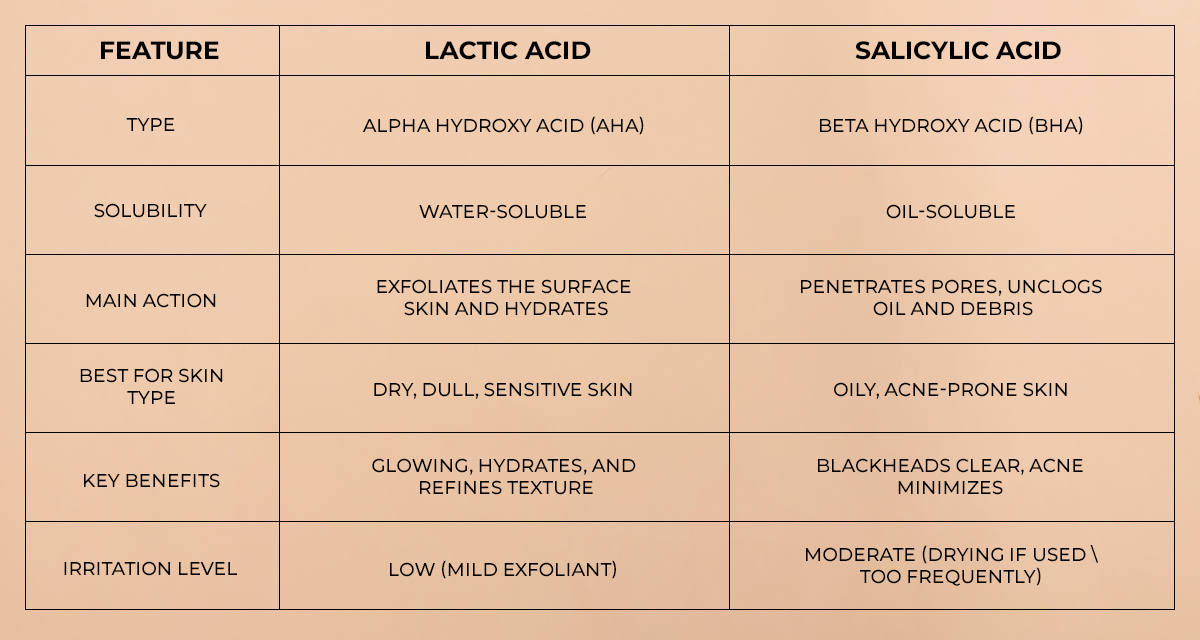
If you have dry or sensitive skin, lactic acid is a gentler and moisturizing alternative. But if you’re dealing with oily skin and stubborn, deep acne, salicylic acid could be a more effective option for you. An individual suffering from both can alternate the application of both acids to complement one another well, but only under the watchful guidance of an expert.
Conclusion
Aside from exfoliating, lactic acid is also effective in hydrating the skin. The ability of lactic acid to gently exfoliate dead skin cells while simultaneously retaining moisture makes it ideal for anyone looking to develop a healthy and radiant routine.
Depending on whether you need a lactic acid face wash for healthy-looking skin or need to learn how to calm dull, dry skin, this ingredient deserves your daily attention.
The Rose and Rabbit Creamy Facial Wash serves as a good prelude to lactic acid transformations, as it's a trusted product recommended by dermatologists that combines the purported benefits of lactic acid into a one-step process.
This facial wash is ideal for individuals seeking a lactic acid product that promotes glowing skin without harsh chemicals or overly drying ingredients. Healthy, gorgeous skin doesn't have to come with a 10-step skincare routine. Sometimes, all it takes is just that perfect cleanser.


